
The Lecture Was a Brilliant Solution. The Problem Is That the Problem Changed.

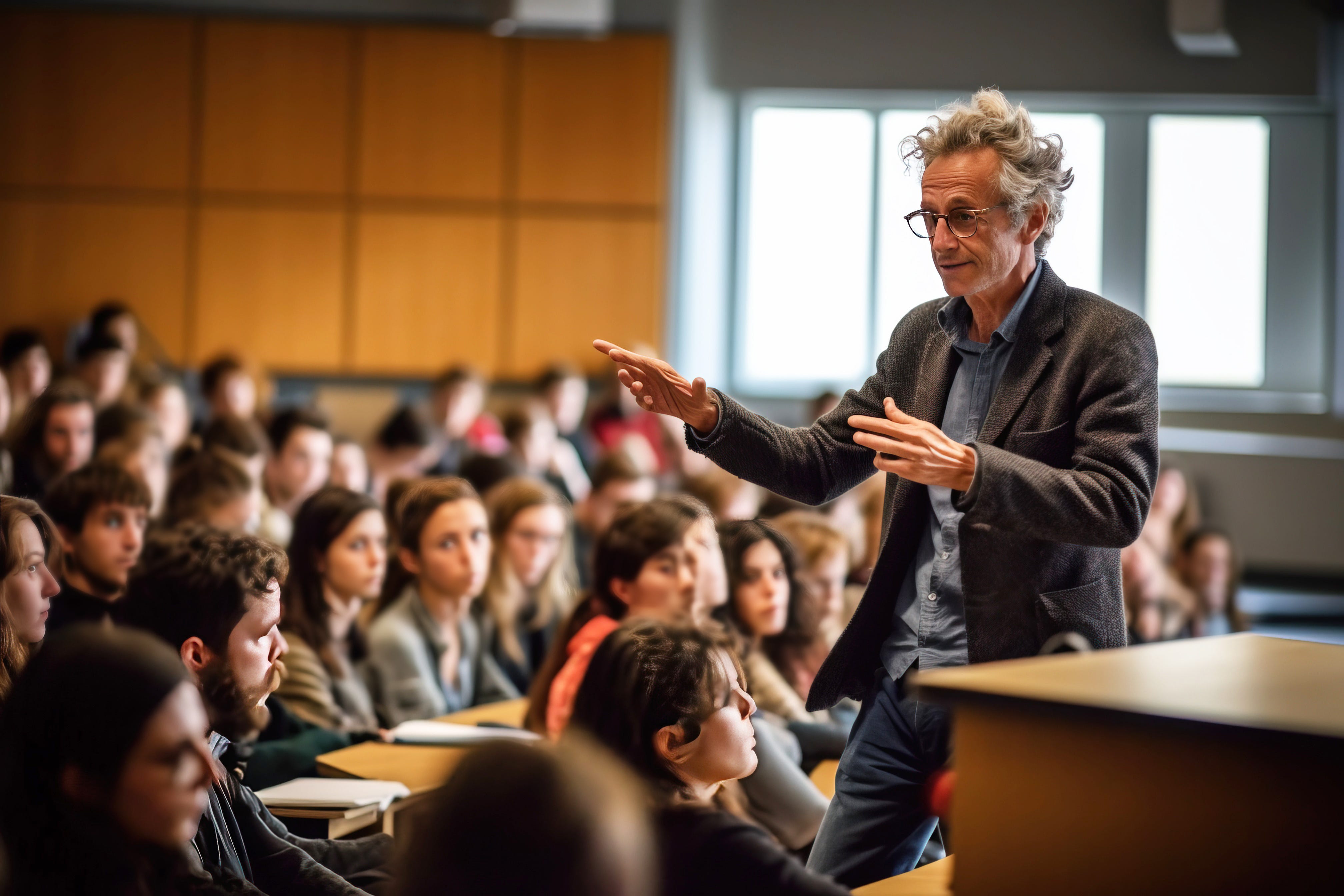
Walk into a university classroom today and you will see a teaching method that would be instantly recognizable to a professor from 500 years ago.
A faculty member stands at the front of the room. Students sit in rows. Information flows primarily in one direction.
Despite enormous advances in educational research, technology, and our understanding of how people learn, the lecture remains one of the most common instructional approaches in higher education.
Why?
The answer requires understanding why lectures existed in the first place.
The Original Purpose of the Lecture
The word “lecture” comes from the Latin word lectio, which means “a reading.”
In the earliest European universities of the Middle Ages, books were rare, expensive, and often unavailable to students. A professor’s job was literally to read from a text while students copied the material by hand.
The professor was not simply an expert. The professor was the access point to knowledge.
If you wanted to learn from Aristotle, you did not purchase a copy online, download a PDF, or watch a YouTube video. You sat in a room and listened to someone who had access to the text.
In that context, lectures were revolutionary.
They allowed knowledge to be distributed to larger groups of people than would otherwise have been possible. Lectures were an efficient technology for an era of information scarcity.
The Rise of the Expert
As universities evolved, the purpose of lectures began to shift.
Printing presses made books more accessible. Libraries expanded. Students gained greater access to information.
Yet lectures remained central because professors offered something more than access to content. They provided interpretation.
Students attended lectures not merely to hear facts but to hear how experts understood those facts.
The lecture became a way for scholars to organize complex information, connect ideas, and expose students to disciplinary ways of thinking.
For centuries, this remained a valuable function.
The professor was still one of the primary gateways to expertise.
The Information Explosion
The twentieth century dramatically altered the educational landscape.
Books became inexpensive.
Television emerged.
Then came personal computers.
Then the internet.
Then search engines.
Then smartphones.
Then artificial intelligence.
For the first time in human history, access to information ceased to be a meaningful barrier to learning.
Today’s students can access more information from a smartphone in thirty seconds than a medieval scholar could access in a lifetime.
This raises an uncomfortable question.
If the lecture was originally designed to solve the problem of information scarcity, what happens when information becomes abundant?
The Evidence Begins to Accumulate
For decades, educational researchers have studied how students learn.
The findings are remarkably consistent.
Students learn more effectively when they actively engage with content rather than passively receive it.
Discussion, problem-solving, application, reflection, collaboration, retrieval practice, and feedback consistently outperform passive listening alone.
This does not mean lectures are ineffective.
It means lectures are often insufficient.
Listening can be valuable. It can inspire. It can clarify. It can provide structure and context.
But learning occurs when students do something with information, not merely when they hear it.
The question is no longer whether students can access information.
The question is whether they can analyze it, evaluate it, apply it, and create something meaningful from it.
Why Change Is So Difficult
If the evidence is so clear, why do lectures remain dominant?
Part of the answer is tradition.
Universities are institutions that preserve knowledge. That strength can also make them resistant to change.
Part of the answer is practicality.
Lectures scale. One professor can teach hundreds of students at once. Active learning often requires additional planning, resources, and support.
Part of the answer is identity.
Most professors were taught through lectures. Most earned advanced degrees through lecture-based systems. Most have spent years observing lectures before ever teaching their own classes.
As a result, many faculty members unconsciously equate teaching with lecturing because it is the model they experienced.
We teach the way we were taught.
Even when evidence suggests better alternatives exist.
The Next Evolution
None of this means lectures should disappear.
The lecture is not the enemy.
The challenge is recognizing that lectures are a tool, not a teaching philosophy.
A well-delivered lecture can introduce a concept, spark curiosity, provide context, and help students understand why something matters.
What it should not do is carry the entire burden of learning.
The future of higher education is unlikely to be lecture versus active learning.
It is more likely to be lecture plus engagement.
Lecture plus discussion.
Lecture plus practice.
Lecture plus feedback.
Lecture plus application.
The most effective instructors of the future will not ask, “How do I deliver this content?”
They will ask, “What do students need to do with this content?”
That is a fundamentally different question.
And it reflects the reality of our time.
The lecture was created to solve the problem of limited access to information.
That problem has largely been solved.
The next stage in the evolution of higher education is not helping students find information.
It is helping them make sense of it.
Universities transformed themselves once when knowledge became more accessible.
The challenge now is whether they are willing to evolve again.